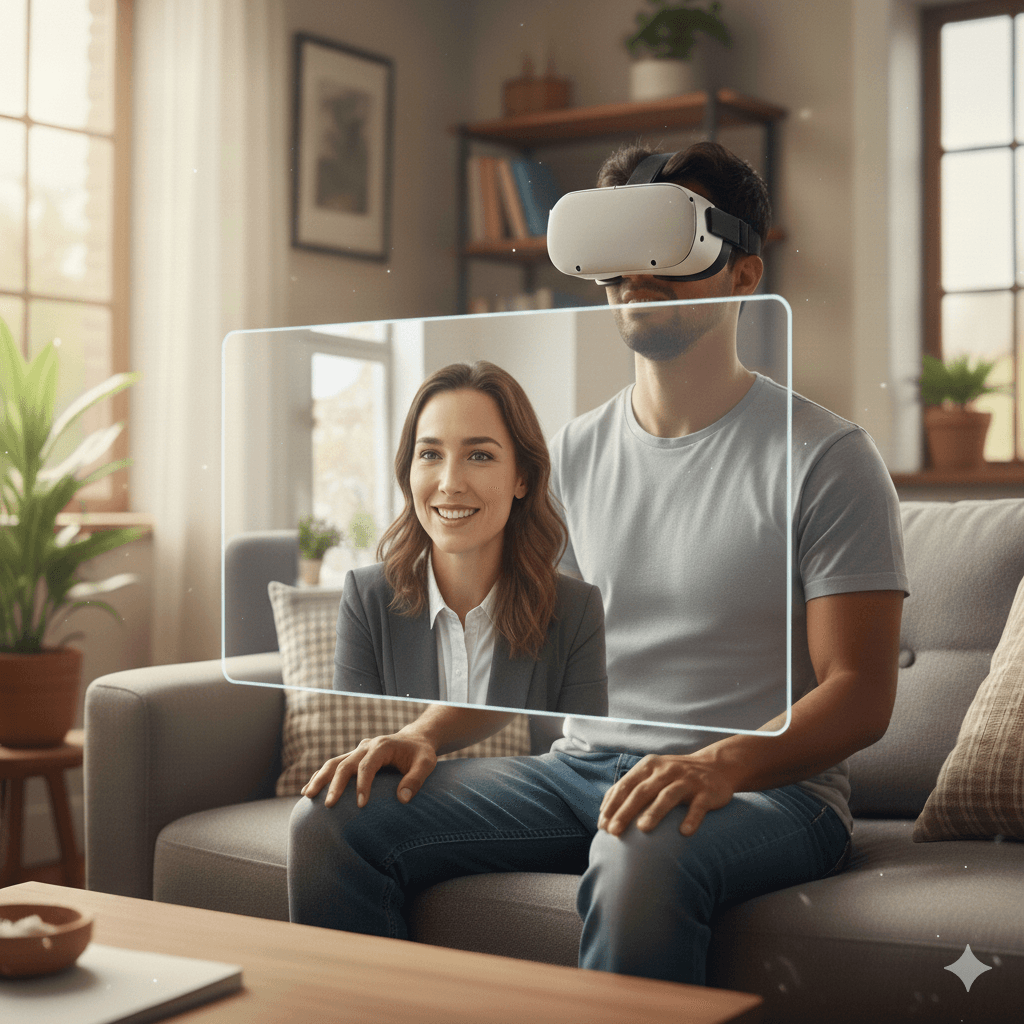
VR has come a long way. Games, fitness, training, meetings. But video, the thing most of us watch every day, has lagged behind. Put a normal video in a headset and it feels like a television floating in an empty room.
What real 3D changes
3D video gives each eye its own view, the way your eyes work in daily life. Objects sit at different distances. Faces have shape. A room has a size you can feel.
That sounds like a small change. In a headset it is not. You stop watching a picture of a moment and start feeling like you are in it.
Where it already works well
- Family memories. A child's first steps, a holiday, a wedding. Depth makes these feel present instead of remembered.
- Training. Anything where distance and scale matter is clearer in 3D.
- Product and property. Viewers can see how big something is and how it fits together.
- Concerts and events. Being close to the stage means something again.
The reason it stayed niche
Until recently, making 3D video meant a special camera rig and a long edit. Very few people had either, so there was almost nothing to watch. Headsets got better while the content stayed thin.
What changed
AI depth conversion. You no longer need a 3D camera, because the depth can be worked out from footage you already have. The video on your phone from three years ago can become a 3D video you step into.
That is what we do. You upload a normal video, we convert it in the cloud, and we stream it to your Meta Quest or Apple Vision Pro. No cables, no player apps, no subscription. You buy minutes once and they stay valid for 12 months.
Try it on a memory you care about
Pick a video that means something to you. Convert the first 2 minutes free and watch it in your headset. That is the moment most people understand what the fuss is about.